


The Original Noah's Tzohar

Welcome to noahstzohar.com! © This website and all its findings are copyrighted protected All Rights Reserved

This website is dedicated to the discovery and authentication of the original Noah's Tzohar gemstone, an ancient stone with biblical significance. Once misattributed and appraised by Sotheby's New York, United States of America, in November 1995 as being at least 2,000 years old, possibly made between 1204 BC and 1503 BC, owned by 12 Kings, and had an international value in 1995 of $250 million USD.
The Tzohar, thought by many not to exist, is a precious gemstone initially from the Garden of Eden itself, broken off from a large mountain that once illuminated the entire earth for three whole days when Almighty God said let there be light recorded in Genesis chapter 1:3. On day four God created the sun, the moon and the stars. After Adam sinned, and was cast out of the Garden of Eden, God himself broke off a small piece of that stone and ordered the angel Raziel to give it to Adam. This is
called the Tzohar.
Evidence of the existence of the stone during the Paleolithic era.
Hidden inscriptions never seen before by the public eyes reveals that this stone-carved shape dates to the Paleolithic era between over 3.3 million years ago BC to 14,000 BC. Before the first Ice Age. This is the same stone that is mentioned in the Book of Genesis, chapter 6: 16. High-resolution images of the back of this stone, along with Forensic AI technology, revealed information of an authentic ancient cave art known to have been drawn up to over 3.3 million years ago on the Tzohar.
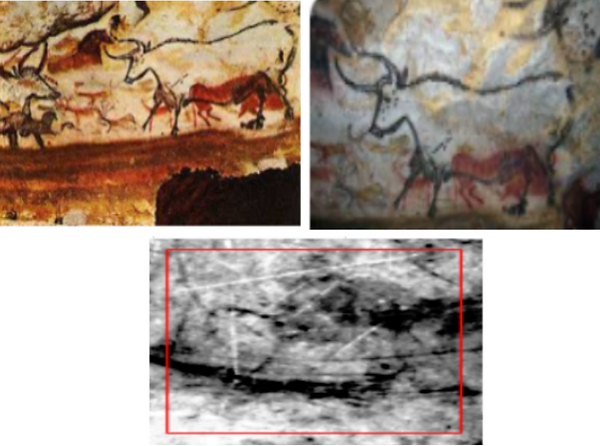
Enclosed in the red box is an ancient drawing of Bulls
Provenance
The Tzohar was made in the Garden of Eden, particularly in the area of the mountains in Northeastern Iraq, over 3.3 million years ago by Almighty God before the Paleolithic era. Based on the historical text from the Holy Bible in Genesis chapter 6:16, which confirms that the Tzohar stone was much larger when God gave it to Adam, this supports the claim that Adam was a giant when God created him.
In Genesis chapter 6: 16 God commands Noah to break down the Tzohar and finish it the size of a cubit. A scripture long overlooked by many. Meaning this was a physical item.
What is the size of a cubit?
The size of a cubit in ancient times measured the length of a human's end of the palm, to the tip of their longest finger, times six. In certain cases, there was a measurement known as a Royal cubit; for this, another palm's length is added, making the length of seven palms or from the end of your elbow to the tip of your longest finger.
This Tzohar measures 1 Royal Cubit x 1 Cubit exactly as God commanded Noah.
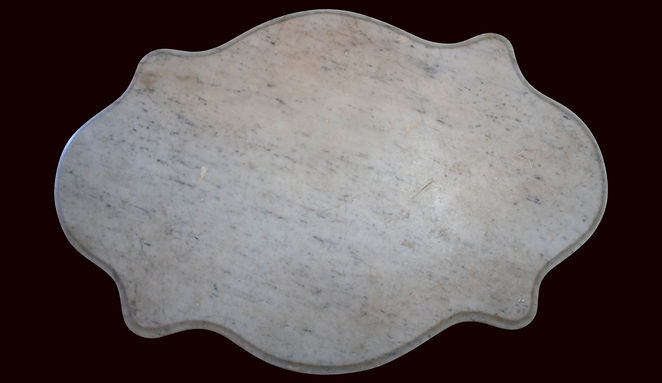

All ancient stones carved from the BC era have these markings on them, as seen below on the Tzohar.

Stone Age Paleolithic era showing Tzohar existed before the Bronze & Iron Age
According to Dr Howard Melville at Brock University, this stone is at least 360 to 480 million years old.
According to Professor Emeritus Howard E. Schwartz, who has a Doctorate in Jewish studies. In his publication of his findings on the Tzohar published before the discovery of this stone was first made by Joshua Darling. God asked the Angel Raziel to deliver this stone to Adam, which was after Adam was expelled from the Garden of Eden, as a reminder to Adam of the light that Adam had lost.
The traditional Jewish writings in the Talmud tell us that Adam was 33 years old when he sinned, and would have been expelled from the Garden of Eden almost immediately. Adam is recorded in the Book of Genesis chapter 5:5 to have lived and died at the age of 930 years old. On his deathbed, Adam gifted this Tzohar to his son Seth as the next owner of the Tzohar. Seth is recorded in the Book of Genesis chapter 5:6-8 to have lived and died at the age of 912 years old. Seth is believed to have gifted the larger version of the Tzohar to his son Enos, who is recorded in the Book of Genesis chapter 5:11 to have lived and died at the age of 905 years old. Before Enos would have died, this Tzohar would have been gifted by Enos to his son Cainan, who is recorded in the Book of Genesis chapter 5:12 - 13 to have lived and died at 910 years old.
Cainan is believed to have gifted the larger version of this Tzohar to his son Mahalaleel, who is recorded in the Book of Genesis chapter 5, verses 13-16, to have lived and died at 895 years old. Mahalaleel had sons; he was the father of Jared and the brother of Jared, whose name was not mentioned, but was a Prophet described in detail who talked often physically with Jesus Christ, once for three hours, long before Jesus Christ was even born. This is recorded in The Book of Mormon, specifically in The Book of Ether, in Ether chapters 1 through 6. Both Jared and his brother were co-owners of this Tzohar. Jared founder of the Jaredites is also recorded in the Book of Genesis chapter 5:18-20, to have lived and died at the age of 962 years old. The Brother of Jared was much younger than Jared; his name was not given in the text of the Book of Mormon, but Joseph Smith, who wrote the Book of Mormon, stated in 1834 AD that his name was Mahonri Moriancumer and his age at death was never recorded. After the death of Jared, the Tzohar was gifted to Jared’s son Enoch (the Prophet who walked with God); however, the Tzohar was also owned by Enoch's youngest brother Orihah, who later became King Orihah, King of the Jaredites, which is recorded in the Book of Mormon in the Book of Ether chapter 6. Therefore, clarifying that Jared, as founder of the Jaradities, was a King. Orihah comes in as last place among the list of heirs chosen to be King. He became the King because all of his older brothers, including Enoch, refused to accept the title as King.
Enoch the Prophet's youngest brother, was King Orihah, meaning that Enoch was a Prince even though not mentioned in the Holy Bible. Enoch is recorded in the Book of Genesis, chapter 5: 21-24, as a Prophet to have lived and walked with God for 300 years and did not see death. Enoch is recorded to have lived to 365 years in total. Before God had translated Enoch, Enoch gifted this Tzohar to his son Methuselah. Methuselah is recorded in the Book of Genesis, chapter 5:25-27, to have been the oldest person who ever lived. Methuselah is recorded to have lived and died at the age of 969 years old.It was Methuselah who gave the larger Tzohar version to his son Lamech. Lamech was the father of Noah, meaning that at this point, Lamech was King even though the Holy Bible doesn't mention it.According to an ancient stone found on mesopotamiangods.com, that particular stone tablet was extracted from an archeological site and bears the names of all 8 Kings that existed before the flood. On that stone it also mentions how long each King had reigned. According to the archaeologists and scholars of mesopotamiangods.com, those 8 Kings' names on that stone are believed to represent not 8 individual Kings but 8 Dynasties that existed before Noah's flood, as the length of years of all 8 Kings named added up to 222,600 years, and the oldest man only lived 969 years.The last King mentioned on that stone tablet was King UBUR TUTU, and on that stone, King UBUR TUTU is recorded as being the father of Noah. King of Shuruppak, Mesopotamia. In the Holy Bible, his 2nd name is mentioned, and he was known as Lemach, recorded in the Book of Genesis chapter 5: 28-31 Lemach lived and died at the age of 777 years old.
After Lamech died, 5 years later, God commanded Noah to break down the Tzohar and put it on the Ark to preserve it for future generations. Methuselah died the year of the flood. When God told Noah to put the Tzohar on the Ark, Noah knew exactly what God meant. It was Noah, also known as King Ziusudra, who finished the Tzohar in its current shape. A hidden image found by Mr. Joshua Darling in 2025 AD on the back of the Tzohar represents an elderly man posing with a staff standing in front of a rounded-shaped Ark. This drawing represents what both the original Ark and Noah himself would have looked like.

Ancient Mesopotamian drawing found on Tzohar of Noah the Ark & animals
Further all 8 Kings Dynasties known to have existed before the Great Flood are recorded on the back of the Tzohar itself as part of the Tzohar's provenance, which Sotheby's missed.


Enclosed in red are two Kings' Dynasties who existed before Noah's flood on Tzohar
The Tzohar also confirmed that Noah and King Ziusudra are the same person, as someone from the ancient past, probably a close relative or a previous owner, wrote on this ancient stone the name Ziusudra on the back of the Tzohar in the section of the old man representing Noah as part of the provenance.


Enclosed in red show that Noah and King Ziusudra are the same person
God himself commanded Noah to break down the Tzohar, and where to fasten it in the Ark, "above, on the side of the door, three stories in the air." finish it the size of a cubit, found in the Book of Genesis chapter 6: 16, and God also told him why, to save it, for future generations.
Noah cut this stone into its current shape and polished one side of it, the front, and hung it up high in the Ark as God commanded him to do. There was only one window in the three-storey-tall Ark that Noah had made. When the Tzohar is cleaned and freshly polished, and the reflection of the sun touches the Tzohar, it is known to shine dim, and when the UV rays of the moon shine on the Tzohar, it is said to reflect brightly. Some have even likened its light to being as bright as the noonday. This was how Noah gauged when it was day and when it was night from inside the dark Ark for 40 days and 40 nights. This stone is the original Noah's Tzohar.
After Noah had landed on the Mount called Ararat, located in what we know today as modern-day Turkey. Noah would have recorded this historical event like any human would for future generations, as God told Noah to do the same in bringing the Tzohar on the Ark in the first place. Noah, at the time of the flood, was 600 years old. Noah also knew that the wood from the Ark would deteriorate over time, as he himself was 600 years old and would have seen wood rot many times. The Tzohar would have been the only physical thing that Noah had that he could have recorded this historical event on. As the Ark only held Noah, his family of eight in total with their clothes, the animals, and their food, and water supply.
This is why Noah had instructed his relative, the artist in the family, to draw what is an ancient Mesopotamian drawing of himself, and these animals, standing with Noah and the Ark on the days they boarded and arrived
safely.
According to a publication by the
Rationalist Judaism
written by Natan Slifkin
publication date
October 27, 2022
Titled "How Many Giraffes Were On The Ark?"
Mr Slifkin mentions how a quarter of a century from this date, he spoke with and heard from a director of the Jerusalem Biblical Zoo speak about how every depiction of Noah's Ark has a pair of giraffes on the deck, and they are all false or fabricated. According to the Holy Bible in the Book of Genesis, chapter 7: 1-3
Genesis chapter 7: 1-3 KJV
7 And the Lord said unto Noah, Come thou and all thy house into the ark; for thee have I seen righteous before me in this generation.
2 Of every clean beast thou shalt take to thee by sevens, the male and his female: and of beasts that are not clean by two, the male and his female.
3 Of fowls also of the air by sevens, the male and the female; to keep seed alive upon the face of all the earth.
The giraffe was definitely considered a clean animal. So there would have been a total of fourteen giraffes on Noah's Ark.
I am proud to report that this ancient stone, found to be the original Noah's Tzohar, has fourteen giraffes drawn in ancient Mesopotamian drawings on the back of it, along with the drawings representing many other animals.

Many other ancient drawings of animals surrounding the image representing Noah on the Tzohar include bears, lions, tigers, frogs, dogs, cats, elephants, monkeys and others.

The Tzohar does have several different ancient historical texts on it written in multiple languages that we were not able to translate at the time of this publication in 2026.
This information on the back of the Tzohar stone shows ownership, and further confirms that this Tzohar had to have passed through this specific genealogy in order for it to have gotten to Noah, also known as King Ziusudra, which also lines up in accordance with the other ancient Mesopotamian stone found on mesopotamiangods.com previously mentioned.
The next owner of the Tzohar is believed to have been Shem, the son of Noah. The Holy Bible confirms in the Book of Genesis chapter 11:10 that Shem was 100 years old at the birth of his son Arphaxad, which was two years after the flood, and that Shem lived for another 500 years after, making Shem’s age at the point of death 600 years old. Shem was the oldest of the sons of Noah and was a key figure in the genealogy leading to Abraham, according to Professor Howard E. Schwartz's publication on the Tzohar. Abraham also owned this Tzohar. Abraham was a descendant of Noah through his son Shem, who it is believed that Shem would have been the next owner of the Tzohar for it to have gotten to Abraham, who was a significant figure in the Abrahamic religions, which include Judaism, Christianity, and Islam, and also in the Tzohar’s provenance.
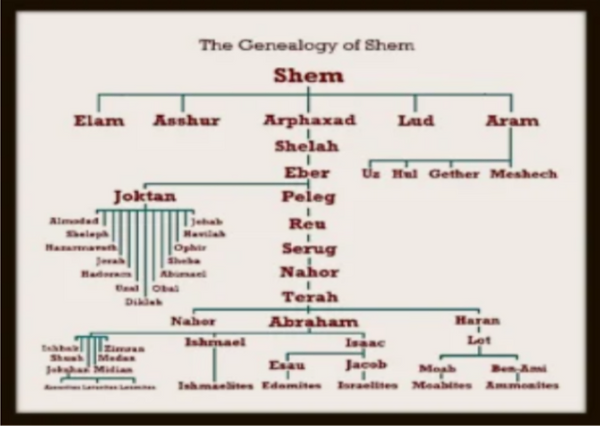
This is the correct genealogy from Shem to Abraham; these men are believed to have once owned the Tzohar.
The Tzohar does have several different ancient historical texts on it written in multiple languages that we were not able to translate at the time of this publication in 2026.
This information on the back of the Tzohar stone shows ownership, and further confirms that this Tzohar had to have passed through this specific genealogy in order for it to have gotten to Noah, also known as King Ziusudra, which also lines up in accordance with the other ancient Mesopotamian stone found on mesopotamiangods.com previously mentioned.
The next owner of the Tzohar is believed to have been Shem, the son of Noah. The Holy Bible confirms in the Book of Genesis chapter 11:10 that Shem was 100 years old at the birth of his son Arphaxad, which was two years after the flood, and that Shem lived for another 500 years after, making Shem’s age at the point of death 600 years old. Shem was the oldest of the sons of Noah and was a key figure in the genealogy leading to Abraham, according to Professor Howard E. Schwartz's publication on the Tzohar. Abraham also owned this Tzohar. Abraham was a descendant of Noah through his son Shem, who it is believed that Shem would have been the next owner of the Tzohar for it to have gotten to Abraham, who was a significant figure in the Abrahamic religions, which include Judaism, Christianity, and Islam, and also in the Tzohar’s provenance.
This is the correct genealogy from Shem to Abraham; these men are believed to have once owned the Tzohar.

From this diagram, we can see more closely the correct genealogy from Abraham to Jacob, the father of Joseph.
According to both the Disciples of Luke and Matthew, Jesus Christ was a descendant of Abraham, Isaac, Jacob, Judah, Jesse, and David. The connection to these ancestors helped to confirm Jesus Christ as the Redeemer. In the Book of Matthew chapter 1:1–17 and in the Book of Luke 3:23–38, Matthew and Luke successfully traced Jesus Christ's genealogy, linking Him to each of these ancestors. Jesus Christ is also mentioned in the Tzohar's provenance as one of the previous owners of this stone, and is represented as the largest ancient drawing on this stone, which Sotheby's also missed. But first, let us get to the evidence which is believed based thereon that both Joseph and King David owned this exact Tzohar stone.
The Book of Deuteronomy, chapter 26:4-5, states that the Israelites were the children of Jacob. But from Abraham to Jacob, they were known as Syrians, as the Holy Bible states. When Jacob’s name was changed to Israel, his descendants were no longer known as Syrians, and they became known as the Israelites.
Abraham was a central figure in Judaism, Christianity, and Islam, and is generally believed to have lived and died during the early 2nd millennium BC, roughly between 2,100 BC and 1,900 BC at the age of 175 years old according to the Book of Genesis chapter 27: 7-11. Abraham undoubtedly is believed to have gifted this Tzohar stone to his son, Isaac.
Isaac is recorded in the Book of Genesis chapter 35: 27-29 to have lived and died at the age of 180 years old. The records of the Book of Genesis chapter 15 took place 15 years before the birth of Isaac. Isaac is believed to have gifted the Tzohar to his son Jacob, and Jacob is recorded in the Book of Genesis chapter 49: 29-33 to have lived and died at the age of 147 years old. According to the publication of Professor Howard E. Schwartz on the Tzohar. Jacob is also believed to have gifted this same Tzohar stone to his son Joseph, who was a giant. Professor Schwartz explains in his report how he determined that Joseph was a giant. Professor Schwartz also stated in his publication on the Tzohar that both Joseph and Abraham were giants, and known to have worn this same Tzohar stone as an emblem around their necks.
If this is so, here we not only see the effects of the age of mankind decreasing because of sin, but sin also shortens the physical size of mankind in accordance with the words of God, which he told Adam, "you will surely die."
According to Professor Howard Schwartz's report on the Tzohar, Joseph owned the Tzohar until the time of his death, meaning that when Joseph was traded to Egypt, the giant Joseph was wearing the Tzohar. Joseph was the only Ruler or Head of State recorded to have been buried with the Tzohar stone. It was a common practice during this time period for all Egyptian Rulers or Heads of state to be buried with their treasures, which the Tzohar was certainly considered a treasure that Joseph wore around his neck. The Book of Genesis chapter 41:41-52 confirms that Joseph was appointed Vizier (Prime Minister) to the Pharaoh - probably by Pharaoh Amenemhat III (c. 1678 BC - 1635 BC) – Joseph held the position as Prime Minister over the Middle Kingdom of Egypt, and Joseph made Pharaoh the most successful Pharaoh of the Middle Kingdom of Egypt. Joseph became one of the most powerful people in Pharaoh's court.
According to the Holy Bible, Joseph was embalmed and buried in a coffin first in Egypt, after having his people swear unto him, to carry his bones away from Egypt when they be set free from Egypt. Later midrash identifies Joseph’s first entombment in a Royal mausoleum. The Book of Joshua concludes with all of the promised lands being successfully conquered, and the territory of Israel parcelled out to the tribes of Israel, and then Joseph's bones were ultimately buried for the second time in their final resting place by his descendants in the town of Shechem.
Almighty God commanded Moses to open the coffin of Joseph and to take this stone out of the coffin of Prime Minister Joseph and bring it with him.
Moses was of the tribe of Benjamin. Prime Minister Joseph is the only Ruler in the history of the world and of the Tzohar who was buried with the Tzohar. The Israelites were enslaved in Egypt for 430 years.. Therefore, Joseph's remains would have been a skeleton by the time that Moses and the Israelites were set free from Egypt some hundreds of years later.
Professor Howard Schwartz was laughed at and mocked for his publication on the Tzohar, which many thought was nonsense mainly because until now no one found the Tzohar, so critics assumed that the whole history of the Tzohar was made up, and Professor Howard E Schwartz's Biblical Historical findings some were marked as fiction because of critics and considered his writings a waste of time to read. This publication of Professor Howard Schwartz on the Tzohar helped me, Joshua Darling, with identifying who the ancient drawing of the Skeleton King or Supreme Ruler recorded and drawn as an ancient seated Skeleton seated on a throne was supposed to represent, indicating they were buried with the Tzohar. This drawing below was extracted from the back of the Tzohar stone located in the same section as the other Egyptian Demon god Kings who existed and ruled Egypt, and were also owners of the Tzohar.

Enclosed in red is believed to represent Prime Minister Joseph remains seated on a throne on Tzohar
This Tzohar stone was in the country of Egypt at least three different times and centuries apart. The first, according to the Holy Bible, Abraham and his wife, Sarah, journeyed to Egypt during a famine in Canaan, seeking refuge and food, and they stayed for a period of three months. The second time was when the Israelites were enslaved in the country of Egypt for 430 years, and the third time this stone was in Egypt is mentioned later in the provenance.
As Moses was from the tribe of Benjamin, the Tzohar was then passed through the tribe of the Benjaminites till it got to Saul, a Benjaminite the same was appointed the first mortal King of the United Kingdom of Israel.
According to the Book of 1st Chronicles chapter 8, this is the genealogy of Saul.
However, the age and death records for the following persons were not recorded during this time, as the Israelites were enslaved for 430 years.
Benjamin, and his firstborn son Bela, and Bela and his son Gera. Gera had his son Elpaal, and Elpaal had his son Beriah, and Beriah had his son Shashak. For the majority of these 430 years, the Tzohar remained inside Joseph's coffin.
During these 430 years of slavery, Egypt praised and worshipped the Egyptian Demon gods as Kings, forcing their drawings to be affixed on the back of the Tzohar.
The drawing below is of the Egyptian Demon god King Anubis, which was recorded on the back of this Tzohar, extracted from a high-resolution image of this Tzohar stone itself.

Recorded and drawn on top of the Egyptian Demon god King Anubis is the Egyptian Demon god King Apep, who succeeded him. Apep is also known as the god of Chaos, which was a giant snake. King Apep, a giant brown-skinned talking snake, considered the ground god, is recorded to have lived from 2,040 BC to 1,782 BC and ruled over the Northern territory of Egypt. There are other ancient Egyptian texts that show strong evidence that King Apep lived even longer and existed before the year 3,100 BC, even as far back as 3,150 BC. According to another Ancient Egyptian Demonic text on Apep, the Egyptian Demon god King Snake, did battle with another Egyptian Demon god King named Seth, (the sky Demon god, not to be confused with Adam's son Seth) who ruled over the Southern territory of Egypt. Their physical battle was for total control over all of Egypt, and Seth killed Apep and took control as the self-proclaimed Demon Egyptian god King over all of Egypt. Images of both Egyptian God King Apep and King Seth, and other Egyptian Demonic god Kings are recorded and drawn on the back of the Tzohar as part of the provenance who actually physically existed.

Enclosed in red is an ancient drawing representing Egyptian Demon god King Apep
This ancient drawing below, extracted from the back of the Tzohar, from a high-resolution image, is believed to represent the battle between the Egyptian Demon god King Seth and Apep, a battle which took place in Egypt around 3,100 BC, and Seth won. If you look closely, you would see that the Demon god of chaos, Apep, is drawn with his mouth open, biting down his mouth, onto the head of the Demon god Seth. Seth's legs and body are also seen drawn standing and attacking Apep, and we know from Egyptian history that Seth, the sky Demon god King, won this fight, which was recorded as a physical Demonic fight that happened between two Demons in Egypt.

Enclosed in red is an ancient drawing believed to represent Egyptian Demon King Apep and Seth's battle aka the Battle of the gods. Seth is portrayed in children's tv show Dragon Ball Super as Beerus the Destroyer god and Apep is portrayed in the children's tv show Yu-Gi-Oh: King Of Games as Slifer the Sky Dragon


An ancient drawing representing Egyptian Demon god King Seth aka Beerus on the Tzohar

Seth aka Beerus, the Egyptian Demon Sky god
This ancient drawing is believed to represent the Egyptian Demon god King Seth, also extracted from the back of the ancient Tzohar. Seth originally existed in the 1st dynasty of Egypt (3,100 BC), and was the great demon god King of Southern Egypt who battled Horus, aka Apep, the great demon god King of Northern Egypt, for rule of the entire Empire of Egypt, and Seth killed Apep. Seth was a sky demon god, lord of the desert, master of storms, disorder, and warfare—in general, Seth was known as a trickster. Seth embodied the necessary and creative element of violence and disorder within the ordered world.
The next Egyptian Demon god King recorded on the back of the Tzohar as seen from ancient drawings claiming ownership was Wepwawet. His name means “the Opener of Ways” to Hell.
Wepwawet was originally a Demon jackal deity, sometimes drawn as a wolf standing up on his hind legs, holding up a sceptre, as he was recorded, and drawn extracted from a high-resolution image on the back of the Tzohar in the provenance as a previous owner of the Tzohar. He is known for his funerary rites, war, and royalty, whose cult centre was Asyut in Upper Egypt. He is also believed to be also known as the Grim Reaper or the Angel of Death.



Enclosed in red shows an ancient drawing representing Egyptian Demon god King Wepwawet aka Liquiir


The Egyptian Demon god King known as Ra was also believed to have owned the Tzohar. Ra is known as the most dangerous and most powerful of the Egyptian Demon gods. Yet he is not Satan. Ra's time period some believe to have existed around 3,000 BC, others believe he lived from 2,575 BC to 2,467 BC. Ra is also believed to be the creator of all demon gods, the head demon. He is considered the most dangerous and most powerful of them all because he is considered the creator deity who established the universe, its laws (Ma'at) and the cycle of time. The supreme sun god who sustains life and acts as the heart of all demon gods. Ra is known to have done daily battles with the chaos serpent demon Apophis. His dangerous nature stems from his absolute power, capable of destroying, punishing and torturing humans with his "eye" (sekhmet) alone. Ra was included in the children's TV series Yu-Gi-Oh: King of Games as the "Wing Dragon called Ra" and portrayed as the most powerful of the Egyptian gods. The Eye of Ra (1,550 BC - 1,070 BC) was drawn on the front of the Tzohar.
The next Egyptian Demon god King believed to have owned the Tzohar was King Apis. Apis is recorded on the back of the Tzohar. Apis was a worshipped Egyptian Demon god King, a Bull. Apis the Demon Bull was attested to have lived as far back as the early 1st Egyptian Dynasty. Some records also record King Apis as to have appeared again for a 2nd time and lived again from 664 BC to 30 BC, King Apis the Egyptian Demon Bull god also known as Hap, Hep, and Hapi, was an ancient, Egyptian Demon god King in a talking Bull form who self-proclaimed himself as the god of fertility and the underworld, who was worshiped throughout all of ancient Egypt. He was known to use his power to control the lives of women. Apis was typically depicted as a black Bull with white markings and wore a sacred menat collar and radiating a sun crown, and his women followers wore weld nose rings to identify with their god King Apis. Apis the Egyptian demon Bull god King was also praised in Egypt as the god of agriculture and fertility. Apis came to be associated with another Egyptian Demon god King known as Ptah, who was the chief Demon Egyptian god King of the Memphis area, and was embodied as a live, sacred Bull in the temple there.
Although King Apis does not appear in the Hebrew text of the Old Testament, the Septuagint text of the Old Testament Prophet Jeremiah includes King Apis in a prophecy warning against Egypt.
The Book of Exodus describes ancient Egyptian sorcerers turning wands into snakes, water into blood, and conjuring up frogs out of nothing. King Apis, like all other previous Egyptian Demon god Kings, had his Demon Sorcerers under his control. King Apis’ Chief Demon Sorcerer spirit still exists today, better known to us today in disguise as seen in the children's tv show Yu-Gi-Oh: King of Games as the “Dark Magician” Yu-Gi-Oh who also played the Pharaoh, his favorite Demon existed in real life in Ancient Egypt from 2,500 BC to 2,100 BC.

Dark Magician Mankind Yu-Gi-Oh
Duel Monsters

King Apis the Bull / Yu-Gi-Oh Muto's favourite Demon Sorcerer, the Dark Magician, is seen in the children's television series Yu-Gi-Oh: King of Games and the card game for children, Duel Monsters which features Egyptian Demonic god Kings and their sorcerers.
The Servant and Chief Sorcerer of the Egyptian Demon god Apis, existed from 2,500 BC to 2,100 BC, was the Dark Magician. He was created and unleashed to do battle against all mankind, mostly upon those that rebel the dictated control of the Egyptian Demon gods.
After the terrorist like reign of Egyptian Demon god Kings, Egypt finally had its first mortal Pharaoh, his name was Menes, and he too is believed to be a previous owner of the Tzohar. Menes was believed to have lived and died between 3200 BC and 3030 BC; some also believed that he lived and died between 3,100 BC and 2,686 BC. If the timeline of all the Egyptian Demon gods is correct as scholars claim recorded, then Menes would have had to have been either much older or Joseph much younger, and these Egyptian Demon gods lived many more years ago, as Menes was recorded as the first Pharaoh, and Joseph was appointed by a Pharaoh to be Prime Minister of Egypt, which means that Menes had to existed before Joseph. This ancient drawing below was also extracted from the back of the Tzohar stone, which is believed to represent Pharaoh Menes. It is not too difficult to determine that this drawing strongly resembles Pharaoh Menes, as he is drawn in the same Egyptian section on the back of the Tzohar, and is very closely drawn to the drawing that is believed to represent Joseph, and Pharaoh Menes had an very unusually shaped head. which made it almost impossible not to recognize him.

Ancient drawing representing the 1st Egyptian Pharaoh Menes found on Tzohar
Before the first dynasty in Egypt. Egypt was in fact two separate lands, and according to folk tales, Menes (also thought to be Narmer) was the first mortal Pharaoh of Egypt, after the rule of all of the Egyptian Demon gods who self-declared themselves as Kings and gods over Egypt. Egypt united these two lands. But by the end of the first dynasty, there appear to have been rival claimants for the throne. Pharaoh Menes is also believed by many to have been the Pharaoh who released Moses and the Israelites, and Moses left Egypt with the Tzohar. The drawings below are believed to represent ancient drawings of a multitude of drawn walking stick people walking in between curved shape drawings believed to represent sea waves. This ancient drawing is believed to be related to or represent the historical event of the Israelites' crossing of the Reed Sea. The Israelites crossed the Reed Sea, not the Red Sea, and it is not a sea but a lake; the Red Sea is in an entirely different location, and the remains of that Pharaoh and his army that chased after Moses and the Israelites are still present in that lake the Reed sea to this very day.
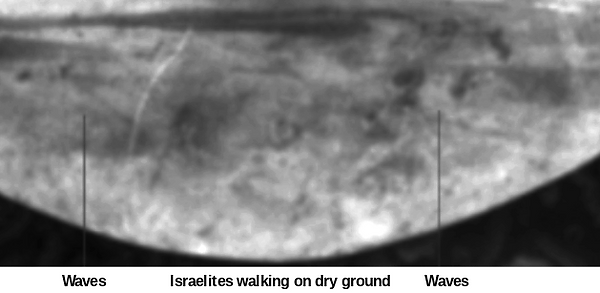


The Israelites remained in the desert of Shur for 40 years. This ancient source supports the claim that the Tzohar was in the possession of Moses and the Israelites when they left Egypt, crossing the Reed Sea and went into Canaan, the Promised Land. Moses is believed to have left the Tzohar with Joshua, the son of Nun, as the next leader of the Israelites on behalf of the people of Israel.
According to the Book of Joshua, Chapter 24:29, Joshua lived and died at the age of 110 years old.
After the death of Joshua, the Israelites entered into a period of leadership transition and moral decline. They lost their focus on God and began serving other idols, leading to periods of oppression and deliverance by the "Judges." The Book of Judges details this era, characterised by cycles of sin, oppression, repentance, and deliverance by God-raised leaders who led them in times of crisis and were raised up and placed by God to deliver the Israelites from foreign oppressors.
The next owner of the Tzohar by succession is believed to have been Othinel. As Othinel was the first Judge of Israel. Othniel, the first judge of Israel in the Book of Judges, is believed to have lived and led during the period of approximately 1350 BC - 1310 BC.
The period of the Judges in Israel was a time when Israel was led by its military leaders. Othniel is recorded as the first warrior-judge of Israel, who captured Debir during the conquest of Canaan. Ehud was the second judge of Israel. The third judge of Israel, according to the Book of Judges, was Shamgar, son of Anath. Shamgar is mentioned briefly in Judges 3:31 as a liberator of Israel who killed six hundred Philistines with an ox-goad. Deborah was the fourth Judge. Othniel was either the nephew or brother of Caleb (1 of the 12 spies sent to the land of Canaan) and Israel's first Judge. After the Spirit of the Lord came upon him, Othniel freed the Israelites from King Cushan-Rishathaim, who ruled the region of Aram Naharaim (the Northwest part of Mesopotamia centuries after the flood).
King Cushan-Rishathaim, who ruled the region of Aram Naharaim (part of Mesopotamia). According to biblical sources, King Cushan-Rishathaim was King of Aram-Naharaim, and was the first oppressor of the Israelites after their settlement in Canaan. In the Book of Judges, God delivers the Israelites into King Cushan-Rishathaim' hands for a period of 8 years as a punishment for polytheism. Therefore, King Cushan-Rishathaim during this time is believed to acquired and owned the Tzohar for 8 years by conquest.
The fifth, sixth, seventh, eighth, ninth, tenth, eleventh, and twelfth Judges of Israel, in order, were Gideon, Abimelech, Tola, Jair, Jephthah, Ibzan, Elon, and Abdon.
The total number of years of all 12 Judges mentioned in the Book of Judges was 410 years.
The Tzohar after the twelfth Judge would have been owned by the Prophet Samuel.
The Book of 1st Samuel Chapter. 7:15 records that Samuel lived and died at the age of 100 years old; Samuel was a significant leader of the Israelites, serving as their last judge, he was judge number thirteen, before the establishment of the monarchy. Samuel played a key role in resolving disputes, leading military campaigns, and travelling between cities, resolving conflicts and serving as a mediator among the Israelites. Samuel also led the Israelites in a war against the Philistines, and he lost that war, a pivotal event that solidified his position as a national leader and ultimately facilitated the transition to kingship with the anointing of Saul as King of the United Kingdom of Israel.
This time period was in the 11th century BC. The events of Samuel expanded over 100 years and are believed to have taken place between 1100 BC and 1000 BC, while other experts believe it was 1070 BC - 1012 BC. However, Samuel did not begin to judge Israel until the age of 40 years old.
Records from (1 Samuel Chapter 6 ) States after the defeat of Israel by the Philistines, the Ark was in the Philistines' possession for 7 months. Evidence on the back of the Tzohar supports that the Tzohar was one of the pieces also owned by the Philistines for these 7 months, as this was the only time that the King of the Philistines had ownership of these items. The evidence which supports this claim is that there is an ancient drawing that is believed to represent the King of the Philistines drawn on the back of the Tzohar. Samuel only regained ownership when God himself intervened seven months after their war, and forced the King of the Philistines to surrender without any war the Ark of the covenant, the Tzohar, and everything that they had belonging to the Israelites, back to the Prophet Samuel without a fight.
It is recorded that Samuel awoke one morning to discover that the Ark of the Covenant and all of the other items that were taken were on a wagon attached to horses walking right up to Samuel with no man riding the horses and the Prophet Samuel recorded this historical event that God did. A ancient drawing believed to represent the King of the Philistines wearing a Philistine’s Crown-helmet during this time period was discovered affixed on the back of the Tzohar.

The next person after Samuel who is believed to have owned the Tzohar was King Saul himself, as the first mortal King of the United Kingdom of Israel.

King Saul was believed to have reigned during the 11th century BC, specifically around 1020 BC -1000 BC, following a period of leadership by the judges. King Saul's reign is documented in the Hebrew Tanakh and the Old Testament in the Holy Bible.
Biblically, there are roughly 500 years between Abraham and King David. Evidence strongly supports that King David himself also owned the Tzohar. King David's reigned during the 10th century BC. King David is recorded to have reigned from 1010 BC to 970 BC, and died at the age of 70 years-old. The Tzohar stone has a recorded ancient drawing on the back of it extracted from a high resolution image what is believed to represent what King David truly looked like.
In the high resolution image below, obtained from the back of the Tzohar, the person who is believed to represent King David shows a spotted face King enseated on a throne. King David was known to have freckles. The image of this King is drawn holding a sceptre in his left hand. King David was also known to have been left-handed. The King is wearing long-sleeve clothing, and there is an ancient drawing representing a lion on one side of his throne, and on the opposite side of his throne, there is an ancient drawing representing a black bear. King David was the only King in world history known to have killed both a lion and a bear and did so with his bare hands. There is also an ancient drawing of a giant Star of David, which the Star of David was invented by King David, which is drawn on the top of King David, further suggesting that this is what King David actually looked like, as only the best artists were chosen to draw the Kings. King David also incorporated the Star of David as the national flag for the United Kingdom of Israel, and there are five smaller stars of David drawn above him, who sits upon the throne, drawn in the shape of an arch believed to represent five flags further supporting the claim that the person in this picture is believed to represent King David himself.


An ancient drawing above believed to represent King David extracted from the back of the Tzohar


There are also ancient drawings of Royal Israeli Guards drawn on the back of the Tzohar each holding long Israeli swords. The length of the swords are drawn on an average length stretching from the Guards’ chest and neck area till almost touching the ground as seen in the images below.

This was the type of sword that David as a shepherd boy at the age of seventeen told King Saul right before he killed Goliath that this sword was too heavy for me, I cannot use it, and then David knocked out Goliath with a stone and a sling shot then ran over to Goliath, and killed Goliath using his own sword by decapitating Goliath. Goliath's sword was much bigger than this average size Israeli sword used for comparison purposes obtained from a museum website.
Their link to the image of this sword is also attached below.

This image of the comparison Israeli sword was obtained from
https://www.researchgate.net/figure/A-straight-sword-found-in-the-region-of-Gaza-the-Israel-Museum-Jerusalem-Gallery-of_fig1_353955159
More Royal guards


Owned by 1,000+ Kings and World Leaders including King David
After the death of King David, which is recorded in the Book of 1st Kings Chapter 2:10-23. King David is believed to have died at the age of 70 years-old in Jerusalem. His son Solomon succeeded him as the next King of Israel. It is believed that King Solomon would have been the next owner of the Tzohar. King Solomon is recorded in the Book of 1st Kings Chapter 11:41-43 to have reigned for 40 years, and died at the age of 80 years-old. King Solomon's son Rehoboam succeeded him, and reigned in his stead for a short while.
It was under the reign of King Rehoboam that ten of the twelve tribes of the United Kingdom of Israel chose to abandon Rehoboam as their King, and chose his brother Jeroboam to rule over Israel as King instead. King Rehoboam then left, along with the remaining two tribes of Israel, and founded the Kingdom of Judah at the opposite border territory of Israel, and became the first King of the Kingdom of Judah and Benjamin. Evidence on the back of the Tzohar is believe to support that King Rehoboam was the next owner of the Tzohar, as the Tzohar became the property of King Nebuchadnezzar II, the Great King of Babylon, when he defeated King Zedekiah. King Nebuchadnezzar the Great is recorded not to go to war against Israel, nor against King Rehoboam, but he is known to have done battle with King Zedekiah, who ruled after King Rehoboam, defeating their smaller startup Kingdom known as the Kingdom of Judah and Benjamin.
Below is an ancient drawing which was extracted from the back of the Tzohar that is believe to represent King Nebuchadnezzar II, King of Babylon. He was identified by his uniquely customized crown and breast plate seen closely in the drawing, and is also holding a sceptre as seen in the same hand.

The Book of (Jeremiah Chapter 52:10–11) States "King Zedekiah, King of Judah and his sons were captured, and the sons were executed in front of Zedekiah, who was then blinded and taken to Babylon with many others." Judah became a Babylonian province, called Yehud, putting an end to the independent Kingdom of Judah. This is when King Zedekiah is believed to have the Tzohar taken from him as the owner.
Further evidence supporting the above drawing represents King Nebuchadnezzar II, the Great King of Babylon is that there is another ancient drawing affixed to the back of the Tzohar shown of King Nebuchadnezzar's god Dagon. King Nebuchadnezzar was a bold man, he had his god drawn directly on top of the Egyptian Demon gods. This was King Nebuchadnezzar making a statement that his god Dagon is superior to all of the Egyptian Demon gods, and this is mine now.

This supports the claim which is believed that King Rehoboam, had to had have the Tzohar with him, in order for King Nebuchadnezzar II, the Great, the King of Babylon, their enemy, to obtain ownership of the Tzohar by conquest from King Zedekiah, who reigned over the same Kingdom, after King Rehoboam.
King Rehoboam ruled for 17 years from 931 BC to 913 BC. His reign is notable for the unfortunate decision that led to the division of the United Kingdom of Israel into the northern and southern kingdoms. He was recorded to have lived and died at the age of 59 years-old from 972 BC to 913 BC. At the point of King Zedekiah's assassination, King Rehoboam’s-Uncle, who was King David’s 2nd son with King Saul's daughter Abigail, their son's name was Chileab, also known as Daniel, was seventeen years old when he was captured because he went along with his nephew King Rehoboam. Chileab (Hebrew: כִלְאָב, Ḵīləʾāḇ), also known as Daniel (the Prophet), at the time Daniel was thrown into the lions' den he was 80 years old and it is believed to be the owner of the Tzohar at 80 years old. the giant X shows lions surrounding him.


At this point, the new Babylon King named Darius liked Daniel and considered him a man of an excellent spirit. He promoted Daniel, and Daniel became one of the three most powerful people in all of Babylon under King Darius, it is believed that King Darius gave Daniel back the Tzohar, even though he and his people were still enslaved. The Evidence to support this theory is drawn on the back of the Tzohar itself, in the ancient image believed to represent Daniel in the lions den praying owning the Tzohar at 80 years while still enslave, that was favor from a King for a slave, a promoted salve to one of the three most powerful people in the country.
According to the Books of Ezra–Nehemiah, many decades later, which was after the death of Daniel, the Jews in Babylon were allowed to return to the Land of Jerusalem. This was because God visited the Persian King Cyrus the Great's and demand he release them or what he is going to do with him and King Cyrus made a decree, released all the slaves. Initially, approximately 50,000 Jews chose to take God's offer and go home to Jerusalem, and the Land of Judah which was, became a self-governing Jewish province under the new Persian Empire. Some Jews decided that they were going to stay slaves, they liked being in slavery. Following the decree of King Cyrus, as described in the Book of Ezra.
The Persian King, Cyrus the Great, also sent back all of the Jews vessels of God which King Nebuchadnezzar had pillaged out of their temple, and had carried to Babylon. The 50,000 Jews that left, are believed to have taken the Tzohar with them to Jerusalem. This discovery also confirms that the Tzohar was one of God’s holy pieces kept in God’s Temple in Judah, and in Jerusalem and was mostly kept by Priests, particularly Priest who knew how to fight were believed to have held ownership of the Tzohar. This would make sense, that among all the wars no one destroyed the Tzohar not even their enemies would have destroyed the Tzohar. All of them good or bad recognized that the Tzohar was one of God's Holy Vessels. It is similar to the Holy Wall in Jerusalem, both Christians, Muslims, and Jews may have fought over the years but no one is destroying that wall.
The owner of the Tzohar at that time period BC is believed to have been Zerubbabel. He was an appointed Governor of Judah by the Persian King, who oversaw the construction of the Second Temple, which was where it was believed that the Tzohar was placed back into while in Jerusalem. At a later date, believed to be at least another 400 to 800 years as the Books in the Holy Bible were written mainly approximately 400 years apart. Prominent leaders like the Priest Ezra and Nehemiah, a believer, are believed to have guarded and were the owners of the Tzohar, and so it is believed was the Priests Haggai, Malachi, and Zechariah.
Zechariah was a Jewish high Priest, and Prophet who lived an exemplary life dedicated to God. He was responsible for the incense in the temple where God's people brought offerings to Him. He was also a descendant of King David, having been born into the house of Judah. Zechariah was a Jewish priest mentioned both the end of The Old Testament and in the beginning of The New Testament, as well as in the Holy Quran, and venerated in Christianity and Islam. In the Holy Bible, Zechariah is recorded as being both the father of John the Baptist, and a Priest of the sons of Aaron in the Gospel of Luke (in the Book of Luke Chapter 1:67–79), and the husband of Elizabeth who was the cousin of the Virgin Mary recorded in (the Book of Luke Chapter 1:36).
After the death of Zechariah his son John The Baptist is believed to have been the next owner of this Tzohar, and after the beheading of John The Baptist the Tzohar is believed to have been gifted by Elizabeth to Jesus Christ himself. Which was how the Lord Jesus Christ the Son of God became Owner of this Tzohar during his short 33 years while here with us on earth.
This ancient drawing below was extracted from a high-resolution image obtained from the back of the Tzohar, which is the largest drawing on the back of the Tzohar which is believed to represent the crucifixion of Jesus Christ. He is drawn as the largest drawing on the back of the Tzohar, signifying Jesus as the King of Kings and the Lord of All Lords. He is drawn with what appears to represent snakes around his lower legs, as seen in the image below.


When this same image was turned upside down, it transformed itself into another ancient drawing believed to represent the resurrection of Jesus Christ, further signifying that the person on the cross represents Jesus Christ of Nazareth. Jesus is seen as an image of a man lying dead, and at another point of him starting to sit upright, and another point with him fully standing up walking.

The next owners of the Tzohar are believed to have been the next males in the family, the two younger half brothers of Jesus, James and Jude.
Both were skeptical of Jesus' teaching during his ministry, but all that changed after they both witnessed Jesus' resurrection for themselves. Both of Jesus' brothers, James and Jude, instantly were converted, and went on to become followers of Jesus and leaders in the early church, each writing a New Testament Book, found in the Holy Bible, James the elder of the two is believed to have gotten the Tzohar.
This same James, the human half-brother of Jesus is believed to have been martyred either in the year 62 AD by being stoned to death on the order of the High Priest Ananus ben Ananus, or in the year 69 AD by being thrown off the pinnacle of the Temple by scribes and Pharisees and then clubbed to death.
The Tzohar is believed to have been confiscated from James, the half-brother of Jesus, after James' death by the High Priest and gave it to the Roman Emperor, which the Tzohar was believed to have remained, property of the Roman Emperors through the entire 2nd, 3rd and early 4th century CE.
One of the many forms of evidence that supports this claim is another ancient drawing extracted from the back of the Tzohar which shows a battle between two Kings or Emperors. Roman gladiators during this time period,were known as the "Dimachaeri," and they fought using two swords, specifically either curved scimitars or gladii, and were known for their close-combat skills, they carried no shields to war.
The ancient drawing below on the back of the Tzohar is believe to represent a Roman Soldier in battle wearing a crown that represents the King of the Roman Empire during this time period, drawn using two swords engaged in a battle. The Emperor is drawn in close combat using a double criss cross sword swing motion, swinging two swords in his hands at his opponent, and his opponent in the drawing is holding a dagger in his right hand, swinging the dagger in a overhead coming downward motion, aiming for the Roman Emperor's head. This image below is believed to have been affixed to the back of the Tzohar in or around the year 410 AD, and is believed to represent the battle of 410 AD which the King of the Ancient Roman Dimachaeri Soldiers lost. Notice that this soldier is wearing a crown and not a helmet possibly representing that a King or the Head of a country was at war himself during this time period.

History states that Rome had tangled with Germanic tribes for centuries, and by the 300s CE, the “Barbarian” groups like the Goths had encroached beyond the Empire's borders. The Romans weathered a Germanic uprising in the late fourth century, but in 410 CE, the Visigoth King Alaric successfully sacked the city of Rome, and were believed to have been the next owners of the Tzohar.
During the 2nd century CE, the leaders of the Roman Empire who more are believed to have likely owned the Tzohar during this time period were prominent Roman Kings aka Emperors which include Trajan, Hadrian, Antoninus Pius, Marcus Aurelius, and Commodus. In the 4th century CE, key figures were Diocletian, Constantine the Great, and Theodosius I, they all were believed to have been the next owners of the Tzohar.
During the 3rd century CE, a period marked by the "Crisis of the Third Century," the Roman Empire saw a succession of emperors, many of whom were military leaders, with frequent assassinations and usurpers, prominent leaders believed to have owned the Tzohar during this time period were many Kings, Emperors and Military leaders included people like Maximinus Thrax, Philip the Arab, Gallienus, Aurelian, and Diocletian.
During the 4th century CE, the Roman Empire was led by Diocletian, Constantine the Great, Theodosius I, and Valens were also believed to have been owners of the Tzohar.
The Roman General Flavius Stilicho defeated Visigoth King Alaric in the Battle of Pollentia in 402 AD, forcing him to retreat from Italy, and again they did battle at the Battle of Verona in 403 AD, although King Alaric later returned again in 410 AD and sacked Rome.
After King Alaric's death in 410 AD, his brother-in-law, Ataulf, succeeded him as the Visigoth King, and the Visigoths continued their active reign in the Roman Empire onwards and are believed to be the next owners of the Tzohar.
In 711 A.D, the Visigothic Kingdom in the Iberian Peninsula was defeated by Umayyad troops from North Africa, led by the Berber general Tariq ibn Ziyad, at the Battle of Guadalete, marking the beginning of the Muslim conquest of Spain. General Tariq ibn Ziyad is believed to have taken the Tzohar by conquest.
The Umayyad Caliphate controlled both North Africa and Egypt between 711 AD and 750 AD, and was part of the same expanding Islamic empire under Umayyad rule. General Tariq ibn Ziyad. Within a few years, Ṭāriq and Musa had captured two-thirds of the Iberian Peninsula from the Visigoths. Both Ṭāriq and Musa were simultaneously ordered back to Damascus by the Umayyad Caliph Al-Walid I in 714, where they spent the rest of their lives. The Tzohar, years later, is believed to have been taken to Egypt, where it is believed that it was traded in Egypt for the most profitable value due to it bearing the markings of several of the Ancient Egyptian Demon god Kings on the back. Egypt, back then, may have appeared like a good place to sell or trade. Also, seeing that it reflected multiple Pharaohs from the first dynasty, as well as several Egyptian demon gods on the back of the Tzohar.
The markings describing the reign of these Ancient Egyptian Demon god Kings are shown on the back of the Tzohar from both the BC and early AD eras, which further supports that this Tzohar stone was in Egypt at least three times. Includes the first. Professor Howard E Schwartz's report on the Tzohar confirms that Abraham was the owner of the Tzohar, and Abraham and his wife, Sarah, are recorded to have travelled to Egypt together, where they stayed for a period of only three months. Abraham would have likely had this Tzohar stone with him, since it is believed he was a giant who wore this Tzohar stone around his neck. The second time it is believed that this Tzohar stone was in the country of Egypt was also in the BC era, when the Israelites were enslaved in Egypt for 430 years. The third time that the Tzohar stone was believed to have been in Egypt, as seen below, is when the ancient image of the “All-Seeing Eye” was affixed to it. As this symbol did not exist until around the early 800s AD.

In 868 AD, the Tulunids, ruled by Ahmad ibn Tulun, expanded Egypt's territory into the Levant. He would rule Egypt until he died in May 884 AD, and was succeeded by Governor Khumarawayh. Khumarawayh was murdered by a palace servant in 896 AD, and was succeeded by his son Jaysh, who was dispose of after a few months in favour of another son of his, Harun ibn Khumarawayh.
At the beginning of the 9th century, Egypt fell under the rule of the Abbasid Caliphate. This period saw a shift in power focus with the Abbasids emphasising taxation and centralised authority. The Umayyad Caliphate, which had ruled Egypt since the Islamic conquest in 641 AD, was defeated by the Abbasids. The practice of ruling Egypt through a Governor was resumed under Abdallah ibn Tahir, who decided to reside at Baghdad, sending a Deputy Governor to Egypt to govern for him.
-
750-868 AD:
The Abbasid Caliphate, a successor to the Umayyad Caliphate, initially ruled Egypt, with governors appointed from Baghdad. -
868-905 AD:
The Tulunid dynasty, led by Ahmad ibn Tulun, gained independence from the Abbasids and ruled Egypt, expanding its territory into the Levant. -
905-969 AD:
Egypt reverted to Abbasid control, but this period was marked by instability and power struggles. -
969-1171 AD:
The Fatimid Caliphate, originating in North Africa, conquered Egypt, establishing a new dynasty and shifting the cultural and political centre of the region. -
1171-1300 AD:
-
The Tzohar is believed that it was then taken, and traded in Libya, North Africa. The legend of Saint George and the Dragon is believed to have been affixed on the back of the Tzohar. The legend originates from the city of Silene, Libya, in North Africa, in which Saint George—a soldier venerated in Christianity—defeats a demonic dragon who demanded to be fed human sacrifices daily. Saint George refused to flee, instead he slew the dragon, and rescued the princess of Silene who was next in line to be eaten.

The ancient drawings below, extracted from the back of the Tzohar, are believed to be drawings representing African drawings of Heads of the Ottoman Empire in Libya, North Africa, affixed during the 1500s AD.


-
Libya became part of the allaiance with the Ottoman Empire in the 16th century, specifically in the year 1551 AD. By 1500 AD the ancient city of Silene had long been in decline, and that region came under the control of the Ottoman Empire. The area known to us now as modern-day Libya, was known to the Ottomans as the Eyalet of Tripolitania and was divided into three provinces: Algiers, Tripoli, and Tunis. The city of Tripoli became the colonial capital and the largest city of size in Ottoman Libya during this period. The Ottomans officially took control of the area in 1551 AD. Afterwards, the Tzohar was believed to have been moved to the city of Tripoli.
-
1600 AD The African Kingdom of Lunda, or the Lunda Empire, was formed in the 17th century, emerging from Luba culture around 1600 AD with its power consolidating under the ruler Mwata Yamvo (Mwaant Yav), who established trade routes and expanded from the Upper Kasai River region into modern-day Angola, DRC, and Zambia. Evidence strongly supports that the Heads of the Ottoman Empire, specifically in Tripoli (modern-day Libya), are believed to have traded the Tzohar with the African Kingdom of Lunda, also known as the Lunda Empire.
After the Ottoman Empire traded the Tzohar with the Kingdom of Lunda, the Kingdom of Lunda added its symbol, known as their national flag drawn on the back of the Tzohar seen below in the high-resolution image that was extracted from the back of the Tzohar.

The next owners of the Tzohar are believed to have been the Chokwe Kingdom. This is where Dr. Melancon from Antiquities Encounter Colorado got it right, and missed all of the previous information, and did not bother to confirm that the Chokwe Kingdom first existed in the 16th century on a stone that Sotheby’s previously determined was at least 2,000 years old.The Chokwe Kingdom, a Bantu-speaking people, historically lived in Angola (Central Africa) in the Southern part of the Democratic Republic of Congo, Zambia, and had once been part of the Kingdom of Lunda. During the 16th century, the Chokwe people were once part of the Kingdom of Lunda, and split off and engaged in wars with the Kingdom of Lunda, eventually leading to the Chokwe people establishing their own Kingdom known as the Chokwe Kingdom or the Chokwe Empire, which dominated the region located west of the Kasai River. The Chokwe Kingdom is believed to have owned the Tzohar until the sole acquisition by King James VI of Great Britain and I of Scotland.
The Puritans, also known as the Un-Conan Demon Mutants as portrayed in the 2009 movie "Solomon Kane", actually existed and were believed to have been the next owners of the Tzohar.

Taken from the movie Solomon Kane
2009 for comparison purposes only.
Compared side by side with the early 17th century, around 1604 AD, a drawing extracted from the back of the Tzohar is believed to be of the Puritans. This movie is based on real-life events from the Puritan era. These were Englishmen who dressed like this and wore these bird face like masks.
Around 1604 AD, the time of King James VI of Great Britain and I of Scotland. The Puritans were English Protestants. By the late 16th and early 17th centuries they sought to get rid of the Church of England, of what they considered to be Roman Catholic church practices, their reason claimed was that the Church of England had not been fully reformed, and should become more Protestant.

This was the group that convinced King James VI of Great Britain and I of Scotland to commission a new translation of the Holy Bible. The Puritans also worked very closely with this particular King James, and also persuaded him to start the African slave trade. The Puritans are believed to had visited North Africa and acquired the Tzohar on behalf of King James VI of Great Britain and I of Scotland and first affixed their symbol representing themselves, and later changed their minds and had King James VI of Great Britain and I of Scotland's face to be drawn on the back of the Tzohar and gave it to King James VI and I.
Evidence to support this claim, is an extracted old drawing from the back of the Tzohar showing what strongly resembles King James's face, the VI of Great Britain and I of Scotland. This is believed how the Tzohar got into the British Royal Family's collection prior to 1625 AD.


After the death of King James VI and I in 1625 A.D, his belongings, including precious documents, artworks, clothing, and jewels, were inherited by his son, Charles I, and later became part of the British Royal collection.
After King Charles I's execution in 1649 A.D, much of the Crown's possessions, including gold plate and other items, were sold to fund the new government, and St. Edward's coronation regalia was melted down; it is believed that Tzohar was then sold.
Following King Charles I's execution and the subsequent sale of his possessions, King Charles II, who restored the monarchy, made attempts to buy back his father's collection, but many items had already been sold and dispersed, including other royal collections across Europe.
The Tzohar is believed to have been one of the few pieces recovered by King Charles II, and went back into the British Royal Family's collection. King Charles II of England, Scotland, and Ireland ruled during the Restoration period, from 1660 A.D. to 1685 A.D.
After King Charles II died in 1685 AD, his belongings, including the Royal art collection, possibly containing the Tzohar, were likely passed to his brother, James II, who succeeded him as the King.
The next owner of the Tzohar is believed to have been King James VII of England, who was also King James II of Scotland, and died in exile in France on September 16, 1701 A.D., at Saint-Germain-en-Laye, after a brain hemorrhage.
The next owners of the Tzohar, following King James II's of Scotland death and exile, during the Glorious Revolution, are believed to have been his daughter Mary II and her husband William III of Orange. The throne was offered jointly, and they both became joint monarchs of England.
After Queen Mary II and King William III died, some of their belongings, including the newly commissioned orb and sceptre for their joint coronation, remained with the Crown Jewels at the Tower of London and have not been used since.
After the death of King William III, Queen Anne succeeded to the throne; it is believed that she was the next owner of the Tzohar. Queen Anne was the younger daughter of King James II of Scotland and is often overlooked by historians, yet her time on the throne (1702-1714 AD) changed Great Britain forever. Queen Anne reigned for 12 years, and 315 days, from March 8, 1702 AD, until her death on August 1, 1714 AD. Her reign saw the end of the Stuart dynasty and paved the way for the Georgian era.
Queen Anne was succeeded by King George I. He became the first monarch of the Hanoverian dynasty, and it is believed that he was the next owner of the Tzohar.
After the death of Queen Anne in 1714 AD. Queen Anne's death occurred a few weeks after that of Electress Sophia, and George, Sophia's son, inherited the throne under the Act of Settlement of 1701 AD. He is believed to have been the next owner of the Tzohar.
King George I of Great Britain reigned for approximately 13 years and 4 months, from August 1, 1714 AD, to June 11, 1727 AD. He died during a visit to Hanover, Germany.
He was succeeded by his son, King George II of Great Britain. King George I became the next British Monarch, and he is believed to have been the next owner of the Tzohar. King George II reigned for 33 years and 4 months, from June 11, 1727 AD, to October 25, 1760 AD, and he was succeeded by his grandson, King George III.
King George III reigned for almost 60 years, from 1760 AD to 1820 AD. He ascended the throne on October 25, 1760 AD, and it is believed that he was the next owner of the Tzohar, and died on January 29, 1820 AD. He was the third-longest reigning monarch in British history, surpassed only by Queen Victoria and Queen Elizabeth II, and he was the longest reigning male monarch, having reigned in the British Royal Family at the time.
King George IV succeeded to the throne, and it is believed that he was the next owner of the Tzohar. He reigned as King of the United Kingdom and King of Hanover for 10 years, from January 29, 1820, to June 26, 1830. He was the eldest son of King George III and became Prince Regent in 1811 AD, due to his father's mental illness. George IV's reign as King was marked by his extravagant lifestyle and patronage of the arts.
King William IV was succeeded by his older brother, King George IV, and it is believed that he, too, was the next owner of the Tzohar. King William IV's reign lasted seven (7) years, from June 26, 1830 AD, to June 20, 1837 AD. He succeeded his brother, King George IV, and his niece, Queen Victoria, succeeded him.
Queen Victoria was also an owner of this Tzohar; her reign lasted for 63 years, 7 months, and 2 days. This was from June 20, 1837 AD, when she became Queen, until her death on January 22, 1901 AD. Queen Victoria died at Osborne House on the Isle of Wight after a reign that lasted almost 64 years.
It is a known fact that during Queen Victoria’s reign, Queen Victoria and Prince Albert had ancient antique furniture from different past eras reproduced frequently. Queen Victoria and Prince Albert commissioned several British manufacturing firms, such as Holland & Sons, which was granted a Royal Warrant and became one of the primary suppliers for the British Royal Family. Osborne House, furnished in an Italianate style to match the architecture, Balmoral Castle, Sandringham, and Marlborough House; these residences were also heavily furnished by the firm. Other firms that Queen Victoria commissioned to reproduce ancient furniture into copies were Banting and Dowbiggin. These firms supplied large quantities of everyday furniture to the Royal household. Dowbiggin even reproduced Queen Victoria's throne in 1837, and the Tzohar was also reproduced in copies as well by order of Her Majesty Queen Victoria.
A lot of evidence that supports this still exists today. As the Tzohar was in the British Royal Family collection, Queen Victoria was known and recorded to have done many of these said reproductions while alive in her capacity as Queen of Great Britain. The design of all copies of the Tzohar made by order of Queen Victoria is associated with the Victorian era; the first reproduction took place in Great Britain at Queen Victoria's request, and then expanded throughout Europe, and Queen Victoria kept the original for herself.
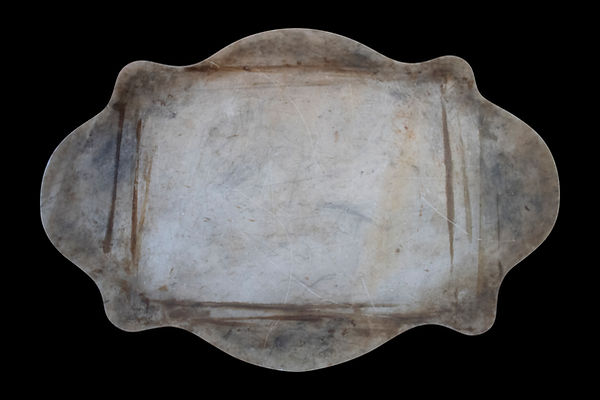
These are pictures of one of the reproductions of the Tzohar, reproduced at the request of Queen Victoria into a table.
Copies



Original

King Edward VII succeeded Queen Victoria, and it is believed he was the next owner of the Tzohar. He reigned for nine years from 1841 AD to 1910 AD.
King George V succeeded his father, King Edward VII, and it is believed that he would have been the next owner of the Tzohar. King George V reigned for twenty-six years, from May 6th, 1910 AD to January 20th, 1936 AD. His eldest son Edward VIII succeeded him, and it is believed that he was the next owner of the Tzohar.
King Edward VIII reigned for eleven months, both starting and ending in 1936 AD. King Edward VIII gave up the throne after only eleven months due to his desire to marry Wallis Simpson, a divorcee, which was opposed by the government. King Edward VIII was succeeded by his younger brother, Prince Albert, who became King George VI, it is believed that he was the next owner of the Tzohar.
King George VI reigned for over fifteen years, which was from December 11th,1936 AD, until his death on February 6th, 1952 AD. He was succeeded by his eldest daughter, Queen Elizabeth II, in 1953 AD.
The Tzohar remained in the British Royal Family until the year 1953 AD. It was in 1953 AD that Her Majesty Queen Elizabeth II herself gave the Tzohar to an American Army General, who had been promoted to Chief of Staff, named George Catlett Marshall, as a personal gift as a table.
George C Marshall served under two United States Presidents. At the time, he served under President Harry Truman, who led the American party representing the United States of America, attending the Coronation of Queen Elizabeth II.
Queen Elizabeth II praised George Marshall, as he was heavily credited as the man responsible for the death of Hitler, and for his Marshall Plan.
Hitler, who orchestrated World War II, caused the deaths of over 100 million people, many of whom were British Citizens. It is recorded that after the coronation of Queen Elizabeth II, Queen Elizabeth II herself held a private dinner event to which she invited Chief of Staff George Marshall.
There, George Marshall was the only person seated at the Queen’s table who was not a member of the British Royal Family.
According to the history passed to the current owner, it is believed that it was either at this event or definitely on this trip that Queen Elizabeth II gave the Tzohar and other items as personal gifts of appreciation to George Marshall.
Below is a picture of Queen Elizabeth II and George Marshall seated at the Tzohar 1953 in the Queen's bedroom.

Queen Elizabeth II and George Marshall with the Tzohar 1953 in the Queen's bedroom
The below is a high-resolution image taken of the front of the Tzohar.


The word Tzohar is written on the Tzohar in ancient Hebrew, further confirming that this is the original Noah's Tzohar.
George Catlett Marshall was not a collector, his foundation often describes him as a man who often gave away gifts, even expensive gifts, given to him given by World Leaders, which he did often.

This same George C. Marshall, gave the original Tzohar stone to his mistress Hessie Estwick, also known as Hessie Marshall, in 1953, who thought that the Tzohar was a regular old antique marble table, and used it as such. Hessie Marshall was a Bahamian citizen from the Settlement called Holmes Rock, over in the city called Freeport, on the Island called Grand Bahama, in the country of The Bahamas.
Hessie Marshall gave the original Tzohar to her daughter, Kathleen Elizabeth Marshall - Darling in 1960, who also used it as a regular antique table. Kathleen would often bake bread and pastries and place them on top of the original Tzohar, thinking it was a table to cool before serving them to her eleven children. Years later, in 1990, the wooden portion deteriorated, leaving the marble stone Tzohar stone itself, and Kathleen Darling gave the original Tzohar stone to her youngest son, a Minister of The Gospel named Bishop James Alexander Darling, the current owner. In November 1995, Bishop James Darling looked at the antique marble tabletop and thought that it was much more than just a regular antique marble table top, and had it appraised. Bishop Darling hired the services of a local Bahamian Government Accessor named Mr. Berkley Ferguson (now deceased). Mr. Ferguson took swab samples and pictures of the antique marble tabletop in November 1995 and sent them to Sotheby's New York, with whom he was affiliated. Sotheby's New York concluded in November 1995 in their report that the stone was at least 2,000 years old. Their experts were not able to reach an exact date and stated possibly made between 1204 BC-1503 BC, Sotheby's found evidence that the stone was owned by 12 Kings. Sotheby's Experts missed all of the other Kings in its provenance, and rushed to conclude in November 1995 that the antique marble tabletop had a fair international value based on the 12 Kings in November 1995 of $250 million USD.
In February 2005, Bishop Darling received a call from Sotheby's New York asking him to bring the antique marble tabletop to New York, claiming that they had a potential buyer. Bishop Darling flew to New York and, while in Sotheby's Head Office in New York City, USA, a male Senior Director came out, and took one look at him, and said this racial comment, "I am not going to help you nor any black man get that kind of money," and left.
In 2016, Bishop Darling had an expert from Colorado, USA, re-authenticate the stone. This was Dr. John A. Melancon, a PhD, Archaeologist (now deceased) as of 2023. Dr. Melancon's report was based on the Sotheby's report, and he also, as Sotheby's concluded, was in error. His report concluded that the stone's origin was the Chokwe people.
It was not until late 2024 that the son of the current owner, Joshua Darling, did research on the Chokwe people and discovered that the Chokwe people first existed during the 1600s AD. This meant that it was obvious that the Chokwe people were not the origin of the ancient antique marble table top, as Dr. John A Melancon stated, as Sotheby's had already established, that the stone was at least 2,000 years old, well into the BC era. This meant that the Chokwe people were not the origin, and were only a previous owner at some point during the 1600s.
As a late discovery, the Tzohar was found to bear both an ancient drawing resembling that of the fictional character "Seto Kaiba holding the millennium rod" located on the back of the Tzohar, near the ancient drawings believed to represent the Egyptian Demon gods.

And an ancient drawing located on the front of the Tzohar resembling that of the fictional character of the Pharaoh standing on the side of what appears to be a young Yu-Gi-Oh Mutou. If you look closely you can see that the image believed to represent the Pharaoh is drawn wearing what appears to be an ancient drawing of the original millennium ring. In the children's television series Yu-Gi-Oh King of Games both Seto and Yui-gi-oh Muto came into possession of two of seven of these ancient Egyptian millennium golden items which was used to control the Egyptian gods Slifer the Sky Dragon and Obelisk the Tormentor.

Around 3,000 BC
According to Egypt's history, a recorded battle between the Egyptian Demon gods Seth and Apep that took place is also inscribed on the back of the Tzohar. It is believed that these ancient drawings and ancient handwritten text, both large and small, discovered on both sides of the Tzohar represent ancient historical records of an actual physical battle that took place in ancient Egypt and other events over 6,000 years ago and beyond.
Around 3,000 BC, a battle took place in Egypt between two super-powerful demons, which the entire country could actually see, and they recorded it multiple times in Egypt's history. It was a battle to the death. The Battle of the gods. Seth believed to represent (Obelisk The Tormentor) verses (Apep believed to represent Slifer the Sky Dragon) were controlled by two mortal humans who used devices and advanced hypnosis sorcery to control these two demons.
This is what the historical imagery evidence supports, this is what recorded Egyptian history contains, and this is also what was reproduced in the children's TV series Yu-Gi-Oh: King Of Games.
Their physical battle in Egypt may have been controlled by the real Seto Kaiba, and this real ancient drawing of this person, highlighted above, who existed probably over 3,000 BC, who strongly resembles the modern-day fictional TV character Pharaoh Atem and Yugi. In a real fight to the death using advanced levels of sorcery, these two people found a way to control the Egyptian Demons using two of the seven of these so-called millennium items devices, which were made, programmed, and functional. Seven were made because it is believed that there were seven demons in Egypt claiming to be gods that were tormenting the people at that time. Egypt did not appoint these demons as gods; these demons popped up after falling from heaven and appointed themselves as gods over Egypt. Egypt at the time is believed that it would have been equivalent to the White House and Washington DC which is why these things took place in Egypt.
These two people fought for total control over Egypt and the world (world domination) with what appears to be, as seen in these ancient drawings, Seto Kaiba's real millennium rod, and the Pharaoh's real millennium ring. Notice in the ancient drawing of what is believed to be the ancient Pharaoh, he has the same hairstyle as what our modern-day TV fictional character Yu-Gi-Oh Mutou, the King of Games, has.
He also has what appears to be a mini version of himself, possibly himself or his son, just like Yugi, standing on the side in front of him, just like Yugi, and also with the same hairstyle and wearing the Millennium Ring just as in the children's TV series Yu-Gi-Oh: King Of Games. They played the real Duel Monsters with actual Demons. If these and other ancient historical texts and images of the past are indeed true as they appear to be, then it would seem even clearer and more realistic why over 300 Kings and World Leaders of the past would have wanted to have the Tzohar in the past, and why the Tzohar has been hidden for so many years from public sight.
The Tzohar could very well possibly contain the location of all seven of the real millennium items as seen in these ancient drawings written in languages hard to decipher but not impossible, and possibly contain instructions on how to use them. If these devices with advance hypnosis sorcery could be used to control these two Demons, understanding that a Demon is a fallen Angel, but still an Angel that has fallen, and according to the Holy Bible mankind was made a little lower than the Angels, it would be stronger than any nuclear weapon, as it could control who holds the weapon and the perfect defense mechanism against such weapons. If these items truly exist as the Tzohar truly exist, and these were used to control demons, initially created with the intent to stop these demons from hurting them, and fell into the wrong hands. Then it would seem just about obvious that these seven millennium devices if used correctly could definitely control mankind, creating a New World Order and the first set of people it would more than likely be used on are other world leaders.
Excavation has been continuously going on in Egypt for thousands of years non stop, what are they truly looking for? The fictional events in this, and some other demonic TV shows are starting to appear that they may not be entirely fictional after all.
After several months of research Joshua Darling was the first person to discover in 2025 that the stone was the Tzohar, and he emailed Sotheby's New York again in 2025, and cc all of Sotheby's Senior Directors in that respective department that deals with these types of stone. Mr. Joshua Darling informed them of his discovery, and of their previous valuation on the same stone at $250 million USD issued by Sotheby's New York in November 1995, and informed them on how his father Bishop James Darling came to New York in February 2005 at Sotheby's request, to sell this stone at $250 million USD in February, 2005, and one of their Senior Directors, upon coming out to meet him, took one look at him for the first time in their life, and insulted him with a racial comment disliking him because of the color of his skin, and then left him standing there in Sotheby's Head Office in New York. Joshua Darling asked all of Sotheby's Directors in that same email, that if now in 2025 AD can the item be presented for sale or does racism still exist within Sotheby's.
And none of Sotheby's Directors responded to that email. Indirectly clarifying, that racism still exist in Sotheby's to this very.
A copy of the same email is attached below.


Below is a faxed letter from former Sotheby's Head of European Furniture Heather Boyd sent to Bishop James Darling at his follow-up request in 2007. English is not her first language. She is still alive, the same is the proprietor of HB Designs. The Request for an updated Appraisal was made because United States Customs Officers in 2005 while Bishop Darling was travelling in the airport requested to see the original Sotheby's Appraisal of 1995, he provided it and US Customs Officers stole that original Sotheby's Appraisal in 2005 from Bishop James A. Darling while he was still in the airport. United States Government attempted to seize the Tzohar, the United states Government performed their own international search and confirmed with every major museum and collectors of such items and the back title with Her Majesty Queen Elizabeth II herself, after confirmation by Queen Elizabeth iI, then Bishop Darling was allowed to have the Tzohar back and then still the United States Government billed Bishop James Darling for their title search, and told him that he had 24 hours to pay the bill or the Tzohar in February 2005 would have become the property of the United States Government. God intervened, the bill was paid, and the Tzohar was brought back to the Bahamas safely using a private charter cargo company called Dolphin Brokerage locatin West Palm Beach, Florida. Their company still exists today.


Joshua Darling, in 2025, after no response from Sotheby's, contacted and hired the services of other international independent Archaeologists, Scientists, Chemists, Political Scientists, and USPAP Bank of America certified Appraisers from around the world, and obtained multiple authentications, which these Experts confirmed that the stone was indeed the original Noahic Tzohar.
It was also discovered that the stone is a one-of-a-kind chronological lithic ledger. The stone was owned by an alliance of at least 1,000+ Kings and World Leaders dating from the BC era up until the late 1500s AD, before the sole acquisition by the Kingdom of Lunda and ultimately the British Monarchs which owned the Tzohar for more than 300 years from the 1600s to 1953 AD, prior to Queen Elizabeth II's gift to George Marshall.
This alliance of Kings pooled together their resources in an act to establish the New World Order, first starting from way back during the BC period, as the Old World Order would have been before Noah's flood. To pull this off, the Kings and World Leaders agreed and decided to use the markings and designs which are hidden and engraved on the Tzohr itself, and had their armies work together, and went around to every continent and country in the world, and laid out these designs as a survey done not from the ground but in the sky in the air above. The entire banking system was run exclusively by Kings from the air dating as far back as the BC period all the way into the 1500s AD. The same hidden engraves which are on the Tzohar are spread across each country's land on the ground in the world, and the only way they can be seen is from the skies above.
It was a genius move to safeguard large gold deposits hidden in plain sight with little to no security. This was done to safeguard and deposit large amounts of gold bars in every country initally intended to form the New World Order. The only map in existence was drawn on the Tzohar itself as part of the lithic ledger left by these Kings.
This means that the Tzohar also acts as a global navigational map and was confirmed as the world's first World Bank access card. This massive undertaking started in the BC era and continued till the late 1500s AD. Markings on the Tzohar confirms man, dragons, and dinosaurs lived together at the same time. Some ancient drawings found on the Tzohar show images of men both standing with and riding on the backs of flying dragons. This is what is believed, how the earth was surveyed back during the BC period, before airplanes and helicopters.
Kings ordered surveyors to ride flying dragons and survey every country from above with the same map; these bunkers were made impossible to be seen from the ground level, as shown in these pictures.
This is a picture of the
United States of America

Easter Island in the country of Chile

The country of Libya

Oak Island, Nova Scotia, Canada The Curse of Oak Island
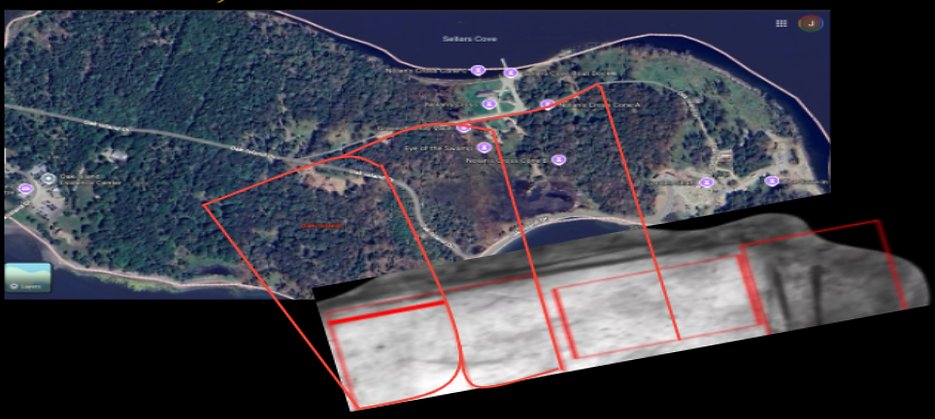
New Providence, Bahamas

Unveiling Noah's Tzohar
All are of different sizes, shapes, and land masses, and all have the same map laid across them from above, as every country in the world does. These were used in a long forgotten World Bank Banking system to safeguard gold and other precious metals and assets in every country. The Holy Bible mentions dragons specifically by name 35 times, and Biblical historians claimed that each Book in the Holy Bible was written approximately 400 years apart. This means that dragons would have existed roughly 8,800 years alive on earth after Noah's flood, as the Book of Genesis was not written until after the flood. As these trained flying dragons died out, their population shrank, and there became a dragon problem, as these bunkers were surveyed to be found from the air, and their only source of air travel was dying. Kings in the alliance rose against other Kingdoms and started killing each other's dragons. To own a flying dragon back then was to have access to and could have easily obtained all of these King's treasures of the world literally. This banking system collapsed, and these underground bunkers, the world's oldest World Bank banking system fade away as time progessed long forgotten. The Tzohar also acted as the world's first form of air traffic control, a lighthouse, and a dock master all in one. As in coming persons on flying dragons, or boats usually at nights bringing in Kings' cargo to fill their bunkers a controller would stand up high either in a high tower building or on a mountain top and using the Tzohar as a giant reflector guide persons in either on their verison of a runway path, or to the dock, or a safe spot to land on land. The Tzohar stone, now having been properly identified, and provenance confirms that it was once owned by over 1,000 Kings and World Leaders as joint tenants before the sole acquisition.
The Tzohar was recently appraised in 2026 with an international fair market value of $150 Billion US Dollars. The Tzohar is for sale; potential qualified buyers can contact us on our website www.noahstzohar.com. Government purchasers are preferred; reasonable offers will be considered. A one (1%) open commission totaling a potential maximum of $1.5 Billion US Dollars is offered to any agent who brings a buyer upon a successful sale.
All viewings will take place in Nassau, Bahamas, the location of the Tzohar.
Closing will take place in Nassau, Bahamas non-negotiable.
No sale will go through Sotheby's. Christie's Auction, House, has informed us in writing that they no longer have a Department that offers items like these from this era, due to having a limited amount of potential buyers.
More pictures revealing hidden ancient secrets of the Tzohar, and more information, as well as forensic authentications, see what Experts have to say on the Tzohar, appraisals, and more are all available on our website at www.noahstzohar.com

Additional Findings Authentication Reports Tzohar Treasure Maps Donate
Archaeologist Tzohar price-Appraisals Tzohar and King Mansa Musa Joshua Darling
Book An Appointment Special Items Tzohar and Zagros Mountains Bishop James A Darling
Succession Of Sovereignty Why Buy The Tzohar Tzohar and The Grand Canyon Tzohar Gold Found So Far
Pictures Of The Tzohar Investor Relations Tzohar and The Sahara Desert Tzohar and Ancient Asia
Noah's Signature Excavations Pending Tzohar and The Roman Empire Contact Us
Mailing address P. O. Box N9571 Nassau, New Providence, Bahamas
Follow


Share

